01
Sixteen question types
Short text, multiple choice, ranking, matrix, scoring bands, file upload and the rest, all of them keyboard-operable and screen-reader tested.
ZoruForms
Public consultation software, used by two UK county and city councils.
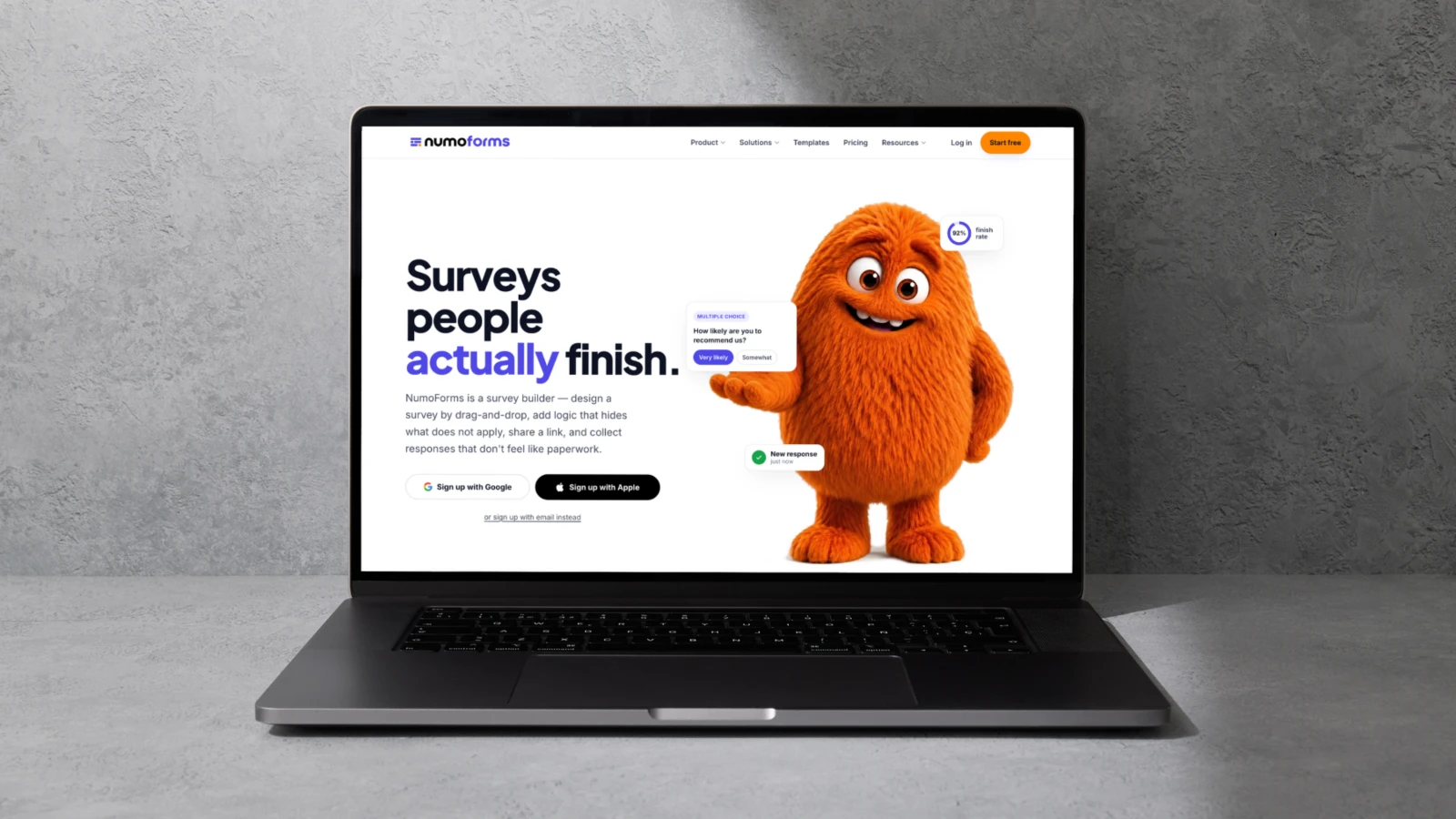
Consultation is only useful if people finish it.
Councils have to consult, and the forms that come out of that obligation are usually long, flat and abandoned halfway. ZoruForms exists because the length is rarely the problem — being asked things that do not apply to you is.
Conditional logic means an 87-question consultation shows you the fourteen that concern you. Save-and-resume means it does not matter if you close the tab. Approvals with a recorded decision trail mean the council can show who signed off what, which is the part that matters when a consultation gets challenged.
We built it and we run it, and we are the ones who get the call if a consultation has to be live on Monday morning.
What is actually in it.
01
Short text, multiple choice, ranking, matrix, scoring bands, file upload and the rest, all of them keyboard-operable and screen-reader tested.
02
Questions appear based on earlier answers, so nobody is asked about a service they do not use.
03
Long consultations get finished across several sittings, because they can be.
04
Who approved what, when, and what changed. Recorded rather than remembered.
05
A different council can be badged on each consultation without a separate deployment.
A consultation is not a form. It is a process.
The building is the part everyone pictures. The rest of it is where a consultation succeeds or gets challenged.
A consultation gets drafted, reviewed by people who did not write it, corrected, approved, published, answered by the public, and then read by somebody who has to act on it. Every one of those steps is a place where the work can stall, and most survey tools only address the first.
So the build is only half of it. Questions can be reordered after review without unpicking the logic that depends on them. A survey carries its own theme and layout, so a district can be badged on its own consultation without a separate deployment of the software. Publishing produces a public link that works on a phone, on an old browser, and with a keyboard alone.
Then the answers come back, and results are summarised as they arrive rather than at the end, because a consultation that closes on Friday is usually needed in a committee paper the following week. The approval trail sits underneath all of it, recording who signed off what and what changed, which is the part that matters when somebody asks how a decision was reached.
The stack.
Hand-coded front end, accessible to WCAG 2.2 AA, running on green hosting with no third-party scripts. Used by Staffordshire County Council.
Get started
Tell us what it has to do and who has to use it. We will tell you what it takes.
Or email hello@oynk.co.uk